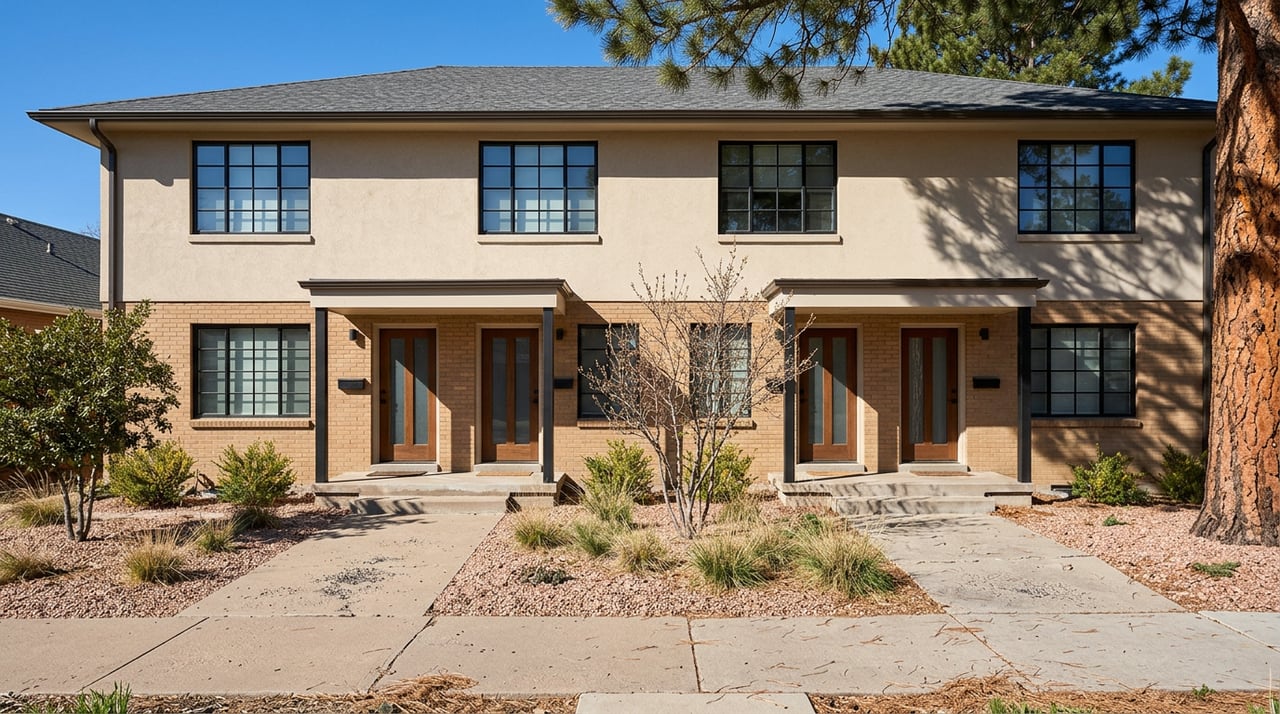
Thinking about buying a duplex, triplex, or fourplex in Colorado Springs? You are not alone. Investors and house hackers are eyeing the Pikes Peak region for steady rent demand and approachable price points compared to bigger Front Range metros. In this guide, you will learn how to underwrite small multifamily in today’s market, which financing paths work, what expenses to expect, and where to look. Let’s dive in.
Why Colorado Springs small multifamily now
Colorado Springs and El Paso County continue to grow, adding roughly 5,800 residents year over year, about a 0.8 percent gain. That steady population trend supports long-term rental demand according to USAFacts county data. Average apartment rents hover around the mid $1,400s to low $1,600s citywide, with RentCafe reporting about $1,490 most recently. Use that only as a backdrop and verify unit-level comps for your property using current RentCafe trend data.
Vacancy has risen from pandemic-era lows to around 6 to 8 percent as new apartments delivered. Local reporting points to heavier deliveries and lease-up concessions near downtown and in newer Class A projects, which can pressure nearby rents as summarized by The Gazette’s vacancy coverage. Expect micro-markets. An in-fill duplex on a quiet block can perform differently than a building a few doors from a 300-unit lease-up.
Major demand drivers include the region’s large defense and space presence, healthcare, and continued net in-migration. These supports help small multifamily hold occupancy even as the city absorbs new supply.
How to underwrite a 2–4 unit in Colorado Springs
Gather the right numbers first
- Current rent roll and signed leases, with deposits and expiration dates.
- True market rent comps by bedroom and by neighborhood. Start with online datasets, then confirm with local property managers and MLS data. RentCafe’s trend view is a helpful baseline.
- Submarket vacancy and concessions. Newer downtown product may run richer move-in specials than older in-fill pockets as recent construction activity highlights.
- Last 12 months of expenses: taxes, insurance, utilities, repairs, and any special district fees. Verify mill levies with county records through El Paso County’s ordinance and levy listings.
- Property condition and capital needs. Inspect roofs, HVAC, electrical, plumbing, and life-safety items.
- Zoning, permit history, and unit legality. Confirm that all units were permitted.
Reasonable starting assumptions here
- Vacancy: use 6 to 8 percent for many parts of the metro, and 8 to 10 percent if you are near heavy new deliveries or soft comps per local vacancy reporting.
- Management: 7 to 10 percent of effective gross income is common for small properties, often plus leasing fees per regional investment benchmarks.
- Operating expense ratio: older small multifamily frequently runs 40 to 50 percent of gross rent when the owner pays some utilities and insurance is higher. Start conservatively using the same benchmark source.
- Reserves and CapEx: plan roughly $300 to $800 per unit per year, adjusted for age and systems.
Do not miss extra income lines
- Laundry, parking, storage, and pet fees.
- Utility reimbursement if metering allows it.
- Short-term rental potential only if permitted. Always confirm city rules and any HOA limits before you count this income.
Financing paths that work here
Owner-occupied conventional can be 5 percent down
Fannie Mae updated its guidelines to allow higher LTVs on 2 to 4 unit owner-occupied purchases, which means you may qualify for a conventional loan with as little as 5 percent down if you will live in one unit and meet lender requirements. Check current overlays, reserves, and loan limits with your lender per Fannie program bulletins summarized here.
FHA 3.5 percent down, with an important test
FHA allows 3.5 percent down on 2 to 4 unit purchases when you occupy one unit. For triplexes and fourplexes, the FHA self-sufficiency test requires the appraiser’s estimated rents, less vacancies and maintenance, to cover PITI. This test can limit feasibility for some 3–4 unit deals in higher-price or lower-rent scenarios. Duplexes do not face that test the same way per FHA program guidance.
Investor loans and DSCR options
If you will not occupy the property, common solutions are portfolio or non-QM loans, including DSCR programs that underwrite primarily to the property’s income. Expect 20 to 30 percent down depending on lender, credit, and cash flow per DSCR program summaries.
How to choose your path
- Decide on occupancy. Living in one unit can reduce your down payment and rate.
- Model both owner-occupied and investor scenarios to compare payment, reserves, and cash flow.
- Confirm lender overlays on LTV, minimum credit scores, and reserve requirements before you offer.
Operating costs, taxes, and rules to know
Management, insurance, and utilities
Plan for a professional manager if you are out of area or prefer a hands-off approach. A 7 to 10 percent management fee plus leasing costs is common for small buildings per regional benchmarks. Insurance in our wind and hail corridor can be a meaningful expense. Get quotes early and clarify which utilities you will pay.
Property taxes and special districts
Colorado taxes are driven by assessment rates and mill levies. In El Paso County, verify the actual bill and any metropolitan or improvement district levies before you finalize your pro forma. Special district debt can materially affect cash flow see the county’s ordinance and levy resources.
Landlord-tenant law updates
Colorado now caps refundable security deposits at two months of rent and sets timelines and rules for returns, late fees, and pet deposits. These changes affect turnover cash flow and your deposit policies. Review the current statutes in Title 38 and plan your underwriting accordingly via the Colorado Revised Statutes.
Short-term rental rules
Short-term rentals are regulated locally. If you plan to incorporate STR income, confirm city permitting requirements and any HOA restrictions before you buy.
Where to look: submarket snapshot
- Downtown and southwest downtown. Recent ground-up development brought new Class A supply and lease-up concessions. Older small multifamily can still perform, but price and rent strategy should reflect nearby competition.
- North side including Briargate and Interquest. Generally stable demand with convenient access to employers and services. Good for long-term holds and house-hack buyers seeking predictable occupancy.
- Powers Corridor, East, Falcon, and Stetson Hills. Strong workforce housing base with proximity to Peterson and Schriever. Often a fit for value-focused buyers who prioritize consistent occupancy.
- West side, Old Colorado City, Manitou Springs, and Broadmoor area. Lifestyle amenities and limited supply can support higher rents on renovated units. Be disciplined on price and condition.
- Outlying options for yield. Fountain, Security-Widefield, and select Tri-Lakes pockets can trade at lower entry prices and higher cap rates but may involve longer commutes and different management dynamics.
A simple 7-step due diligence plan
- Pull 3 to 6 rent comps per unit type in the same neighborhood. Start with online trend tools, then confirm with local managers and MLS data. RentCafe’s comp view is a helpful start.
- Confirm unit legality, permits, and zoning.
- Price both an owner-occupied option and an investor loan option. Include the 5 percent down conventional path if you will occupy one unit per Fannie program change.
- Collect the last 12 months of actual expenses and verify the current tax bill.
- Inspect thoroughly and budget near-term capital items.
- Underwrite conservatively using a 6 to 8 percent vacancy, 7 to 10 percent management fee, and a 40 to 50 percent expense ratio for older buildings per regional benchmarks.
- Review landlord-tenant rules and deposit caps, and confirm any STR limits before you assume those income lines see CRS Title 38.
Current market cautions and how to manage them
- Oversupply pockets. Downtown and other new-build clusters may see concessions. Use hyper-local comps and underwrite to today’s actuals, not wishful rent increases as recent construction trends suggest.
- Rate sensitivity. Investor and DSCR loans can price higher. Match leverage to realistic cash flow and a prudent reserve plan.
- Taxes and special districts. Verify mill levies every year and build them into your renewal budget using county resources.
What a winning offer looks like
- Your loan path is pre-modeled and you have a lender who understands 2 to 4 unit guidelines.
- You submit with a clean, conservative pro forma and proof of reserves.
- You request practical documents up front: rent roll, leases, 12 months of expenses, permits, and recent insurance bills.
- You plan for 45 to 60 days if you need FHA or additional inspections for older systems.
Ready to evaluate a Colorado Springs duplex or fourplex with confidence? Get a tailored pro forma, neighborhood-level rent comps, and a financing game plan that fits your goals. Work with a hands-on local who understands in-fill assets and outlying cash-flow plays. Reach out to John Liese Properties to get started.
FAQs
What cap rates can I expect on small multifamily in Colorado Springs?
- Many stabilized assets trade in the mid 5 percent range, with older or value-add properties often higher. Always price to neighborhood comps and today’s leases.
What vacancy rate should I use when underwriting a duplex or fourplex here?
- A 6 to 8 percent baseline fits many submarkets today, with 8 to 10 percent near heavy new deliveries or soft comps based on recent local reporting.
How much should I budget for property management on a 2–4 unit?
- Plan for 7 to 10 percent of effective gross income, plus leasing and onboarding fees where applicable.
Can I buy a 3–4 unit in Colorado Springs with 5 percent down?
- If you will occupy one unit, some conventional loans now allow as little as 5 percent down on 2 to 4 units, subject to lender overlays and DU findings.
What is the FHA self-sufficiency test for 3–4 units?
- The appraiser’s market rents, less a vacancy and maintenance factor, must cover the full PITI. If the numbers do not pencil, the loan may not qualify.
How do El Paso County special districts affect my taxes?
- Metropolitan or improvement district mill levies can add to your tax bill. Verify levies with the county and include them in your NOI model.
Are short-term rentals allowed for small multifamily in Colorado Springs?
- STRs require local compliance and may be limited by city rules or HOAs. Confirm permits and restrictions before assuming STR income in your pro forma.